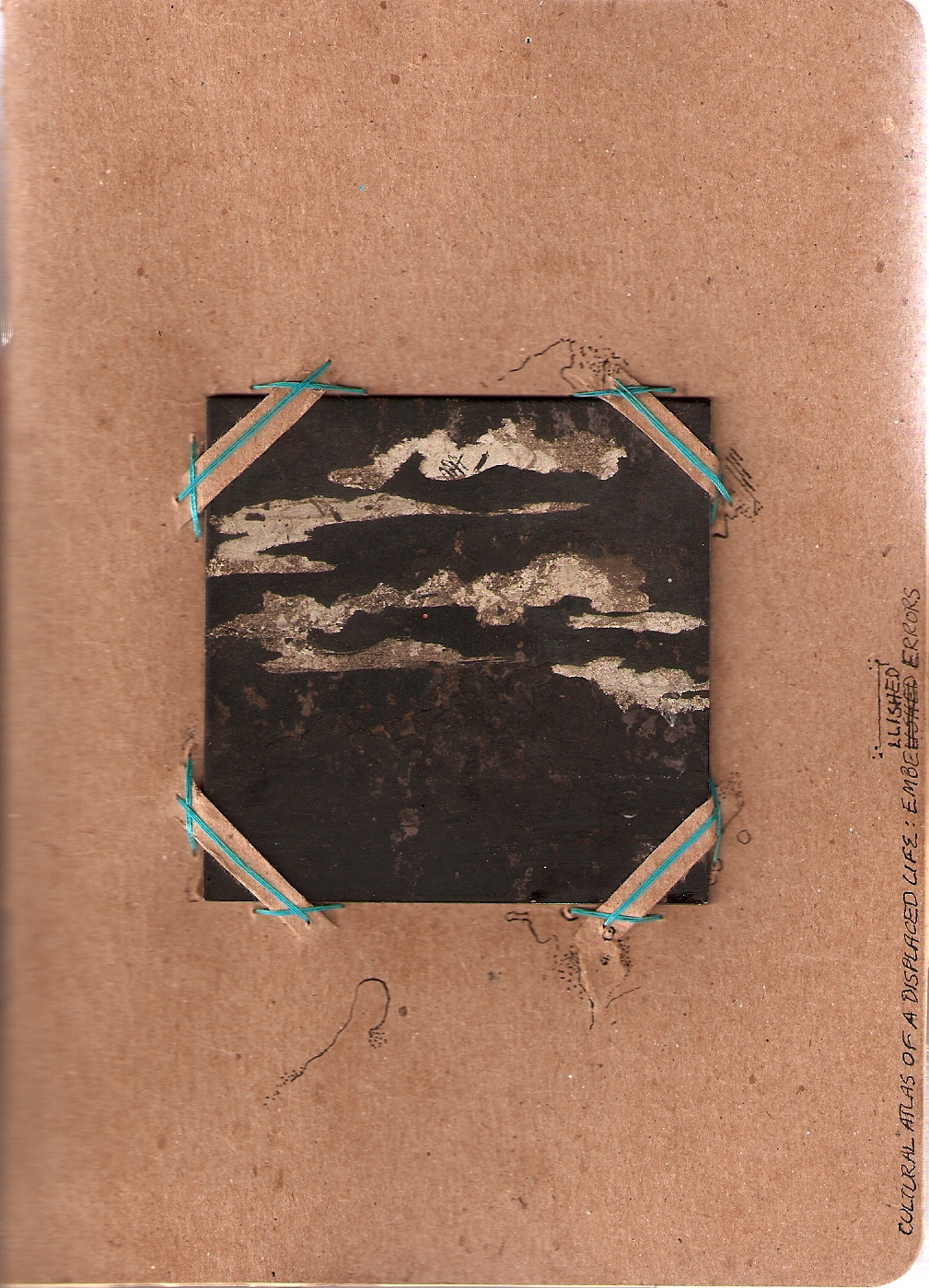
The Ultimate Train Crash…: by Edward M. Stanton

A kaleidoscope
of life collisions.
One by one
precision laser
happenstances,
unexpectedly bombard
without hesitation
and no remorse.
We endure a journey
sometimes peaceful
sometimes tumultuous
but always,
evolving.
Late night candelabras
flicker seemingly
out of control,
all the while staying
closely guarding the wick.
Seashores parade
personalities awash
with character,
yet ever-changing
her psychological landscape.
Whatever happened
to the predictable??
It blew away in the wind,
just as sand scatters
like a herd of cats.
The wonder of life comes
in little packages,
always keeping
us pondering,
and never betraying
her secrets.
Celestial illusions
mislead our common sense,
polluting our dreams
with impossible realities,
never to occur,
banished from becoming.
A harsh reality awaits
those who genuinely
understand,
our lives are
really just molecules
in an existence,
that we can only
pretend to imagine,
amongst galaxies
of the unfamiliar,
and an infinity
truly beyond comprehension.
What a glorious
misconception,
a return to
the unfathomable,
just beyond reach,
yet never further
than our next
fleeting thought,
or our next warm Guiness
full of wallowing sorrows,
and a million spilt suds,
waiting for us nervously
at the corner pub…

To listen to a reading of the poem by the poet, click on the player below:


Copyright Edward M. Stanton 2017

To hear a readings of other poems by Edward M. Stanton, click HERE.

SEKISHU: by Gilles-Marie Chenot

Caresse de soie torrentielle
Coup de foudre neuronal
Dans le silence abrupt
S’illumine la montagne endormie

Tonnerre de feu aquatique
Sur une terre dévastée
Et resplendissante

L’été étreint l’hiver torride
L’obscurité ensoleille la clarté

Une nuit meurt, un jour s’éveille

Equilibre

SEKISHU

Caress of floodly silk
Neuronal lightning strike
In the abrupt silence
The sleepy mountain lights up

Aquatic thunder of fire
On a devastated land
So bright

The summer embraces the torrid winter
Darkness sunlights clearness

A night is dying, a day awakes

Equilibrium

To read more work by Gilles-Marie Chenot (1963-2104), click HERE.
To find other poems by GMC on this blog click HERE.

Prologue to My Birth: by Stephanie Harper

This is neither a beginning
nor the prophecy of an ending
for beginnings & endings are lies
told to the once-living

it is not the exemplifying
of the aberrations the alchemists made
when they dethroned our Divine Queen
& transmuted her golden honey
into their iron pyrite philosophy
that left us to wither
inside our stunned husks

& so    this is the emptying
of our errant devotion
to the denial of bodily hunger

the sanctified unbelieving
in fairytales of heavenly salvation

& it is the vital refilling
of infants’ gaping mouths
with earthly fortitude

& here    now    is the weeping

for our birth-story    interred
with our long-dead mothers
who delivered us
& secured our velvety    aboriginal flesh
to their warm breasts—

the saline unleashing
to purify our Logos
our will to creation    our innate need
to manifest our god-selves

it is the recovering
of the Life that was severed from our psyches
when it was reduced to a Word
& uttered    bereft of melody—

the unrepressed singing
Artemis awake from her slumber
beneath her ruined Temple in Ephesus

at last    this is the extricating
of shame that made our tongues
untie us from our Mother’s holy earth
& swayed our ears to scorn her winged songs
even as she kept flying back to us
ever thick-limbed & fragrant
with nourishment from lavender blooms
solely that we should swell in our birthing cells
gorged on her royal jelly

This poem is my body
embryonic    translucent
distended with new hope

it is my luminous    black eyes
grown huge with their memory
of who I am

lavender-kiss_matthew-harper

To listen to a reading of this poem, click on the player below:

You can read more of Stephanie L. Harper’s poetry on her blog, HERE.

Topografia #20 (a D): di Luka Stojnic

Eppure hai pensato di aver visto tutto il visibile.
Dieci diversi profumi,
Venti colline,
Due fiumi.

Hai annotato tutto.
E la penna scivolava,
Scivolava in fretta.

Sulle mura delle caverne hai disegnato immagini.
Hai coperto di volti le umide rocce.

Il verde si espande, goccia per goccia…
Pennellate su superfici ferme, immobili.
Refoli di un’aria che viene da fuori,
Laddove ci si perde, ci si ritrova.

I luoghi….
Un filo s’allunga, passo per passo.
Ed è il calore della stufa a farci dire di aver sbagliato.
Offuscato, che muta da un freddo reale.

L’aria viene da fuori.
Hai acceso un fuoco dentro,
Bruciandovi il filo di bronzo.

Ammassi di segni sulle pareti,
Contorni di linee che vogliono spiegare.
Il perchè.

Non c’è errore, non c’è.
Si passa in luoghi diversi,
Dove s’impara a guardare.
Scoprire il già veduto.

Topografie #20 (aan D.)

En toch dacht jij al het zichtbare gezien te hebben.
Tien verschillende geuren,
Twintig heuvels,
Twee rivieren.

Je hebt alles opgeschreven.
En de pen gleed,
Gleed haastig.

Op de muren van de grotten heb je beelden getekend.
De vochtige muren heb je bedekt met gelaten.

Het groen breidt zich uit, druppel per druppel…
Penseelstreken op stille oppervlakken, onbeweeglijk.
Vlagen van lucht die van buiten komt,
Daar waar men zich verliest, waar men zich hervindt.

De plaatsen….
Een draad wordt langer, stap voor stap.
En het is de warmte van de kachel die ons doet zeggen dat we fouten hebben gemaakt.
Verduisterd, veranderd vanuit een werkelijke koude.

De lucht komt van buiten.
Binnen heb je een vuur aangestoken,
Waarin je de bronzen draad hebt verbrand.
Massa’s tekens op de wanden,
Contouren van lijnen die willen verklaren.
Het waarom.

Er is geen fout, er is er geen.
Men gaat naar andere plaatsen,
Waar men leert kijken.
Ontdekken wat al gezien is.

(vertaald door Tineke Pockele)

Topography #20 (for D)

And yet you had thought you’d seen all visible things.
Ten different scents,
Twenty hills,
Two rivers.

You had noticed everything.
And the pen slid,
Slid hurriedly.

On the walls of the cave you have drawn images.
You have covered the vaults of damp rocks.

The green expands, drop by drop…
Brushstrokes on surfaces firm, immobile.
Wisps of air that come from outside,
There what is lost, is here found again.

The places….
A wire lengthens, step by step.
And it is the stove’s heat that makes us say we’ve made a mistake.
Obfuscated, changed from a real cold.

The air comes from outside.
You’ve lit a fire inside,
Burning there the bronze wire.

Gatherings of marks on the walls,
Contours of lines that want to explain.
Why.

There is no error, there is none.
One goes to different places,
Where one learns to look.
To discover the already seen.

(translation by Bonnie McClellan-Broussard)

Stella Invades The Modern: by Edward M. Stanton

Visual vocabulary

What you see, is what you see…

Purity violation

Dazzling fluorescents

Overcoming boundaries, the essence of freedom…

Florid excitement

Narrative structure

Unlikely combination of mass and strength…

Scintillating movement

Dauntingly fundamental problems

Unified, forceful and immediate.

Rigorous diagrams

All-over compositions

Massive brutality of a catastrophe.

Emotionally turbulent

Baroque forms and irrational gestures to dominate.

Rhythmic geometry

Semi-industrial atmosphere

Drab color

Unparalleled intensity

Radically reduced compositions distilled and silenced the emotional and transcendental rhetoric that inspired what you see…is what you see.

Pure visual impact

Classical order or baroque theatrics.

Visual connections between seemingly disparate series.

Psychic automatism

A state unmediated by the unconscious mind.

Frankly speaking…
undisputed authenticity.


To listen to a reading of the poem by the poet, click on the player below:

Copyright Edward M. Stanton 2017

To hear a readings of other poems by Edward M. Stanton, click HERE.

RIEN N’EST QU’UN MOT: by Gilles-Marie Chenot

RIEN N’EST QU’UN MOT

Le cœur qui bat
N’a nul besoin de mots
Pour ressentir la clarté de la nuit
Et le chatoiement de l’étoile
Les mots sont des parures volatiles
Que le dénuement enjolive
Mais ne ruisselle dans leur aura
Que le fil de tungstène
Porteur de la volupté
Des caresses intérieures

ET UN MOT N’EST RIEN

NOTHING IS ONLY A WORD

The heart that beats
Has no need of words
To feel the night’s clarity
And the star’s shimmering
Words are volatile adornments
Deprivation embellishes
But in their aura flows nothing
Other than tungsten wire
Carrier of voluptuous
Internal caresses

AND A WORD IS NOTHING

To read more work by Gilles-Marie Chenot (1963-2104), click HERE.
To find other poems by GMC on this blog click HERE.

Angst: by Liliane Richman

………………..Perhaps it was the snow
……………….blanketing all
………………refusing to melt
……………..papering pelting us blind
…………….with its swelling flakes
……………or lassitude
…………..a veil at the front door
………….wrinkled and stained
…………from filtering myriad horror

………..May be midlife crisis unrelenting
……….demanding doomsday income tax accounting
………wrenching flesh spitting

……..Or else a chrysalis
…….harbinger of tender life anew
…..in full evolution

….And what of it
lack of talent? spent imagination?
..should we never more tap words
.on the clavier?

Forget the rot
the self mutilated finger
your amputated leg
Oh! young Rimbaud
How is it you did not mourn the poetry
tracing of the pen writing
revising upon virgin paper?


To find more poetry by Liliane Richman on this blog, click HERE.

Liliane Richman’s recently published memoir, “The Bones of Time” can be found HERE.

hands suspended: by anonymous 20th century poet

had i the resources
to create today
an image external
of the inside of my brain,
you would see before you
a juggler,
eyes cast down
at objects once suspended
patterned
blink to blink
now rendered chaotic
on static floor.


To hear more poems by anonymous 20th century poet, click HERE.
To read more poetry by anonymous 20th century poet, click HERE.

A Brief History of Babel: by Robert Okaji

Borders, windows.
Sound.

Trudging up the steps, I am winded after six flights,
my words smothered in the breathing.

The Gate of God proffers no favors.
When the spirit gives me utterance, what shall I say?

Curiously, no direct link exists between Babel and babble.

A collective aphasia could explain the disruption. One’s
inability to mouth the proper word, another’s
fluency impeded by context.

A stairway terminating in clouds.

Syllable by twisted syllable, dispersed.

Separated in symbols.
And then,
writing.

To see the sunrise from behind a tree, you must face
east: higashi, or, a discrete way of seeing
the structure of language unfold.
Two characters, layered. One
thought. Direction.
Connotation. The sun’s
ascent viewed through branches
as through the frame
of a glassless
window.

Complexity in simplicity.
Or the opposite.

I have no desire to touch heaven, but my tongues reach where they will.

Who can know what we say to God, but God?

And the breeze winding through, carrying fragments.


Listen to a reading of the poem by the poet:

You can find more poetry by Robert Okaji on this site or on his blog HERE . A collection of Robert’s poetry is available in his chapbook “If Your Matter Could Reform” which was published as part of the the National Poetry Month series by Dink Press 

Language’s Power: reading the code

As we near the start of IPM 2017 on Feb. 1st, submissions are arriving and I’m getting excited about presenting them to our readers. I was thinking about communication networks, social networks and neural networks. While looking for images of neural-network maps, I ended up with a bit of a headache from trying to understand what is and isn’t understood about how these cells function in the brain. It turns out there are hundreds of different types of neuronal network maps. I finally settled on one that reminded me of a Gustav Klimt painting – it’s from the sound-processing area of a mouse brain.

A two-photon microscopy image showing a calcium sensor (green), the nuclei of neurons (red) and supporting cells called astrocytes (magenta). Credit: John Issa/Johns Hopkins Medicine
Credit: John Issa/Johns Hopkins Medicine

The number of neurons in the human brain is enormous, estimates vary from 86 to 100 billion, but the truly fascinating thing is that each person has an individual ‘neural map’ that develops over time, formed and annotated by personal experience and varied input. One of the many jobs these networks do from the very beginning is process language – expanding our ability to express ourselves and to understand one another. One of the tools we use to achieve this result is the word; but words must be set within a structure to be understood. Some languages are now unreadable – such as those of the ancient Indus Valley civilizations: the words and their supporting structure are there to be read but, frustratingly, we can no longer decode them. As I mentioned in my previous post, others, such as the Sumerian and Akkadian of the Gilgamesh epic, are thankfully still communicating across the millennia despite the challenges of decoding them.

collection-of-tablets

As this makes clear, despite its power, language is limited – it needs not only a transmitter but also a receiver. As Andrea Moro points out in his book I Speak, Therefore I Am: Seventeen Thoughts About Language:

“We don’t actually see light, we only see its effects on objects. We know it exists because it is partly reflected by the things it encounters, thereby making visible what would otherwise be invisible. In this way nothing, illuminated by another nothing, becomes, for us, something. Words and sentences work in the same way: they have no content of their own, but if they encounter someone who listens they become something.”

Submissions are still open, so if you’re a poet please send your work to be considered. If you’re a reader – get ready to illuminate with your gaze the upcoming 28 poems and transform them into the splendid ‘somethings’ they were meant to be.