IPM 2MXI – Rhyme’s Reason: the lure of form

Since my tumble for the Romantic poets in high school, I had been writing in Free Verse, not the kind that gives poetry a bad name:

“a kind of free verse

without any special

constraints on it except

those imposed by

the notion – also

generally accepted – that

the strip the lines

make as they run

down the page (the

familiar strip with the

jagged

right-hand edge) not

be too wide”

John Hollander from Rhyme’s Reason: A Guide to English Verse

But the kind that any poet with half a wit will recognize as taking a bit of work: with internal rhyme, intentional rhythm, and subtle resonances within the meaning of words from line to line. I wouldn’t own any of it now, but that is more because of the subject matter: painfully romantic and introspective… impossibly beautiful loves, broken hearts left, battered and beating in lonely silence. Not that one shouldn’t write about those things; it’s just that one has to do so really well in order to overcome the built-in triteness waiting to clog up the poetry with a nasty mix of sugar and blood. I wasn’t that good.

I abandoned Byron and  found a new love: William Carlos Williams. I scrawled out his poem This is just to say on part of a paper grocery sack and stuck it to my boyfriend’s refrigerator knowing that he would understand it as the passionate expression of affection that it was. I flirted with Dylan Thomas, Rilke, and Neruda while maintaining an abiding respect for the acid bite of Dorothy Parker and the amazing craftsmanship of Edna St. Vincent Millay. When the same young man left both me and his refrigerator to go off to art school on the east coast it was her : “Not in a silver casket cool with pearls, that I gave him (along with my broken heart) as a parting gift.

I got older. I kept writing. I turned 30.

Somewhere in the late 90’s I got bored with my life (work, eat, watch TV, shop, do the same things with the same friends: repeat); so, I started taking ‘extension courses’ at Southern Methodist University. I signed up for: Introduction to Philosophy, Intermediate Conversational French, Organic Landscaping. The classes were at night, after work; there were no grades. It was another way to use the only reward that I got for working so hard at my job: money.

It seemed like a good investment. For $74.00 I got a few hours of interesting information and conversation two or three days a week for six weeks. Introduction to Philosophy was fascinating, exhilarating; Organic Landscaping helped me cure the bald patches in the lawn of my rental house and left it smelling of tropical islands and pancake syrup. I had though I might have been overreaching  with Intermediate Conversational French but found that none of the other students even knew the passé composé and I ended up both bored and feeling a bit sorry for the professor.

A new brochure for the next round of courses came out: Writing Poetry in Metered Verse. I was excited, I would learn how to construct a sonnet: then if I wanted to I could. I would meet other grown-ups who were interested in doing the same (an audience!). We were in 14, the professor was Martha Heimburg. She helped us work through the text:   John Hollander’s Rhyme’s Reason: A Guide to English Verse and shepherded us into the world of the Deep Ellum poetry slam (a profound disillusionment for me) and submitting our fledgling work to literary journals. More importantly for me, she introduced us to the work of Sharon Olds and Wallace Stevens. I looked at the poems of these writers not with adoration but with curiosity.

I wrote my first sonnet, my first roundel, my first shaped poem. I met with a firey-haired fellow student at the Inwood Bar and drank martini’s while writing exquisite corpse poetry on cocktail napkins. I sent envelopes full of poems off to prestigious and not so prestigious literary journals and in due time got them back with polite and not so polite rejection slips. I switched the poems out and tried again. I kept writing. They came back again. I took a class in book-making, compiled my own work into a small book, made 14 hand-bound copies which I gave away to friends and family. I fell out of love with poetry. I still liked it but who needed the heartache? Occasionally I rearranged the words from my magnetic poetry kit on the refrigerator.

Then, in the middle of the road of my life, I met HIM…I mean, I’d run across him before but I’d been too young to see how attractive he really was: charmingly fragile and filled with self-doubt, bitterly intelligent, and he’d built this huge, fabulous thing, designed it and tied the words to it…and it SANG, and then something inside of me broke and sang back; it hurt. And then it made me blush with the pleasure of reading language tied so intimately to form.

It changed me, unhinged the order of things, made me stop trying to force the language to ‘do what I wanted it to do’ and to start forming an intimate relationship with words and structures in which publication and attention were no longer a goad/goal. I was overcome with desire, a desire and a curiosity as real and as visceral as that one kindled by a lover’s first kiss…

IPM 2MXI: Don’t be Cavalier!

Or maybe you should?

“That age is best which is the first,
When youth and blood are warmer;
But being spent, the worse, and worst
Times still succeed the former.”

-Robert Herrick from:  To the Virgins, to Make Much of Time

I have a strong memory of my Junior Year of high school, I was taking, what they called at the time, AP English or English IV. The class was taught by the redoubtable Donna Northouse who had recently received her doctorate degree (of which she was justly proud and of which I was, pure contrarian teen, deeply disdainful. I often think that if I could go back I would give myself a good smack in the head). If I recall correctly she’d done her thesis on the Cavalier Poets; I was disgusted! Poets who didn’t take poetry seriously, how dare they! Poetry was the sacred territory of unadulterated passion that poured forth directly from the heart; poetry was meant to be blood on the page, seething with raw emotion that would provoke tears and spine tingles in the reader! I wanted to go straight from Shakespeare to the real stuff: The Romantic Poets. I was so relieved when we arrived on the turbulent shores of the Mediterranean buffeted about with Byron, Shelly, and Keats:

“All my faults perchance thou knowest,
All my madness none can know;
All my hopes, where’er thou goest,
Wither, yet with thee they go.”

-George Gordon Lord Byron from Fare Thee Well

I was in love with Byron…he never revised (or said he didn’t), he was good looking, we were both born on the 22 of January! Here was the real stuff, passionate poetry with a capital “P”. From there we went on to study other literary movements and my memory becomes muddled; the image that remains is that of the Romantic Poets and those who followed rescuing me from the Cavalier Poets who were…well…so cavalier about it all!

It would be another 15 years before I came out of my swoon and discovered that there was more to poetry than fire in the blood: love, death, and hopeless despair. It would be almost that long again before I discovered that that the folds of language and the terrain of poetry were deeper than my own navel and more fascinating than the surface of my lover’s skin…


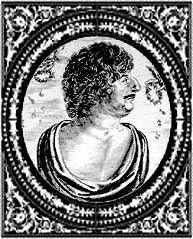
Robert Herrick
Robert Herrick - Cavalier Poet
George Gordon, Lord Byron
George Gordon, Lord Byron - Romantic Poet

VS

Slow progress…IPM 2MXI

I have been trying, for the last month or two, to pull myself together and write the “why” essay for the big Flash Poetry Event that I have on my other blog every February. I still haven’t written it but at least I finally managed to post the submission guidelines and send an e-mail soliciting work to poets who do work that I like. I remember what an amazing amount of work it turned out to be last year and I’m hoping I manage to be a little further ahead this year.
I miss Paul Squires; it was difficult to take his name off the mailing list of poets that I pulled up from last year. I find that I am looking forward to it…fun, inspirational, creatively stimulating and something new every day. It also means that I have to start writing too, and not just the essay, good.

If you’re interested, take a peek: International Poetry Month 2011 – Submit to the Word

List: I’m just the type…

I'm just the type for whom
no end is suffix (ient):
tap (drip, drip, drip)
where is the beer, the syrup, the flow in this day?
clip (ed) to the
dock 
     do I mean to to say kissed where my ship comes in
     or pinned to the dry velvet of a leaf?

finish (ed)
board (ing)
     shall I wave my handkerchief as I sail off
     or thank the landlady for lunch as I wipe my lips
     sliding my legs across the polished wood?

I must be at least two tired to get anywhere,
    looking in wonder through the iris
    that will bear
    up under
    the snow. 

Every cloud has a golden lining – Light in December

I’m not particularly fond of the cold but I love the way it makes the landscape look. I woke up yesterday thinking about light. I was writing an essay in my head that I’m still writing about passion, poetry, and

the pleasure of talking about all of the whys and wherefores of art / writing. To me there is a certain tone of light that I connect with different writing or even with individual poems: The dry desert light of Montale’s Syria, and the thick fog-laden light of Shakespeare’s Richard III (which I did start reading last night). I was thinking about how round the images in those poems are, even if I don’t remember all of the words exactly and thinking about how pleasurable it is to wake up in the morning and have that to roll around in my mind.
The unfortunate thing is that in the evening when I have time, I’m too tired to string my thoughts together coherently and all those connecting threads that were so clear first thing in the morning are broken or muddled by the time it’s 11 p.m. One day I’ll learn to get out of bed in the morning and write it down but that’s hard to do in pre-alpine December…though the view is beautiful and sometimes even I get it right.

TENDER: for Paul Squires (in memorium)

“I miss you and I wanted to write / you a letter to tell you I miss you / but there is no silence / like hello unanswered”

Paul Squires from: “A Small Boy Holding Flowers

TENDER

What is paid?
What is offered?
How is that spot
when pushed?
What are we looking after?

Caulonian Suite: II. Caulonia Supriore

CAULONIA SUPERIORE

for Matthew

The sky roils;

swallows knit webbed gyres

among the baroque sag of rooftops.

Across the way they’re fixing one;

new russet barrel tiles sealed over

old timber bones.

I hear a sound like the pounding

Of a battering ram or the cleaving

Of an immense stump

Contrapunted with a loud HUP.

My daughter sleeps with the abandon

of an unfettered shutter swinging in a stiff wind.

A woman in her fifties climbs the stairs

to the house where she and my daughter

were both conceived.

We regard each other with

that part of the eye

which admits an alternate aim.

The pounding stops.

The church bells go off

with the percussive invective

of a fire alarm

DANGATIDANGATIDANGDANGDANG.

They say it’s peculiar to here:

someone sounds the bell

not with the pull of a knotted rope

but with the unlevered force of arms.

This is the second in a suite of poems about Caulonia Supiore


Via Clivio

the tile lined roof on the last villa

of the petty nobles of this town

sags like the jaw line of a matron.

her voice sings out

a spinster’s peevish tweet:

“VERGOGNA! VERGOGNA!”

she:

(distant falling daughter of whatever local saint

though aren’t we all?)

shames her poor dog.

he of:

nothing to do but go mad with barking;

jamesian psycosis

closed shutters

infinite empty rooms.

Series I : Polyvalence : context is everything

Series I : polyvalence* : context is everything

1.

Burial at Sea

WAKE

2.

Speaking Truth toPower/The Admonitions Scroll

STAY

CURRENT

3.

Morning Shift

CHANGE

SIMPLE DRESS

MOVE


*pol·y·va·lent (pŏl’ē-vā’lənt)
adj.

  1. Acting against or interacting with more than one kind of antigen, antibody, toxin, or microorganism.
  2. Chemistry
    1. Having more than one valence.
    2. Having a valence of 3 or higher.

3. (fig.) having many different functions, forms, or facets.