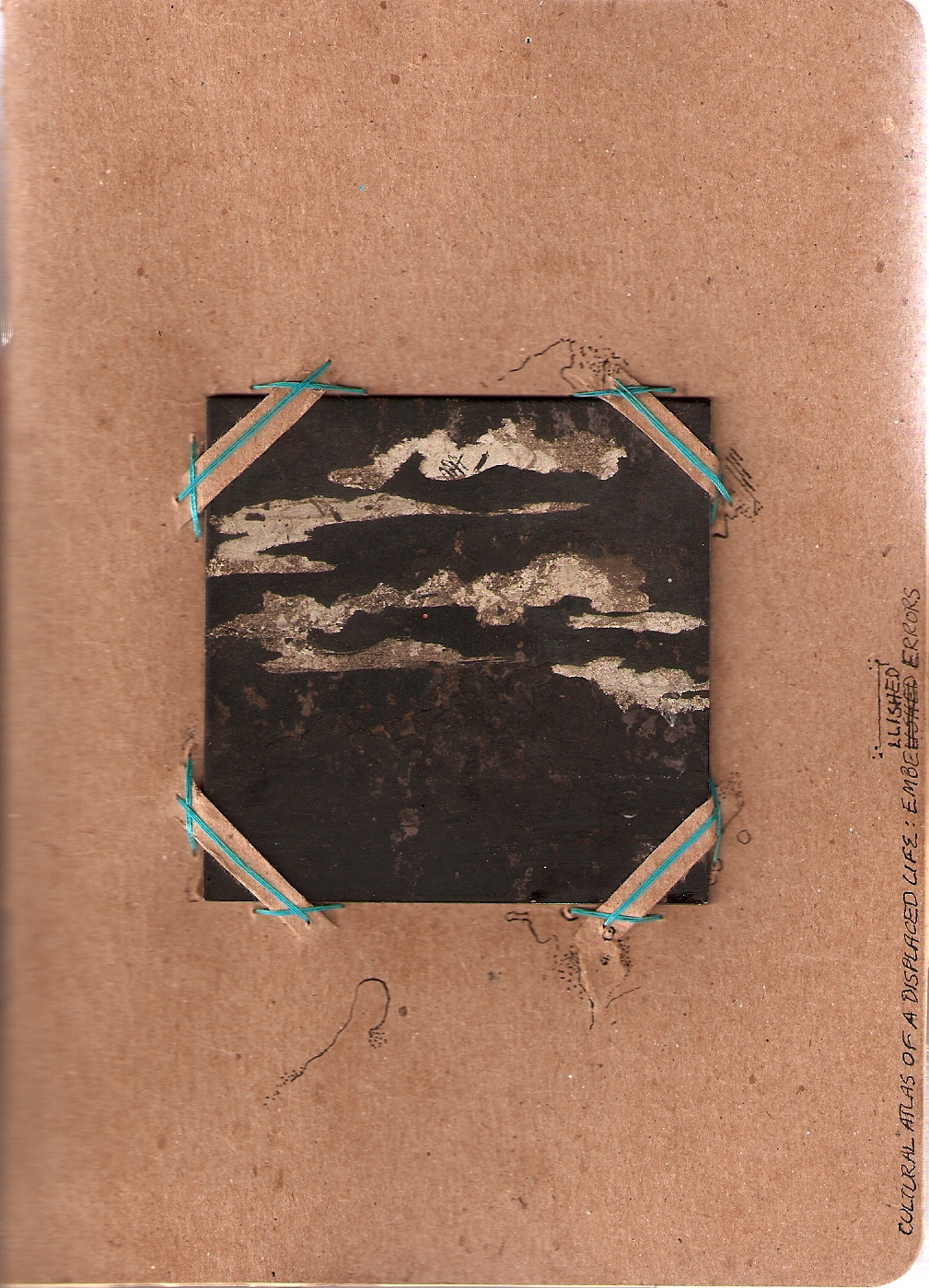
Cultural Atlas of a Displaced Life: Size(mic) Map of Texeuropa

copyright 2012 Bonnie McClellan - all rights reserved
Metaphorical scale map of Texas and Europe

Texas is large but the map is only metaphorically in scale. I spent 38 years in Texas and just 7 in Europe but European culture also holds the underpinnings of U.S. culture. In real terms, Texas is about equal to continental France, Belgium, Luxembourg and Switzerland all stuck together (but not nearly as densely populated).

As a Texan living in Italy, “Where are you from?” is a question I get asked a lot. It’s an easy answer; I grew up in Dallas and I have yet to meet an Italian who doesn’t know that it’s the city where either:

  1. JFK was shot, or
  2. the TV series Dallas was made.

This is where I fall on a map though few of them could tell you where the state is in the U.S. and I am often, when describing distances in Texas, constrained to superimpose a map of Europe over my internal map which results in comparisons like:

“Texas is about as big as France / Texas è più o meno la stessa grandezza della Francia.”

Or time/distance equations with multiple variables:

“It takes the same amount of time to drive from Dallas to the border with Mexico as it does to drive from Liguria to Calabria / Ci vuole lo stesso tempo di guidare da Dallas al confine con il Messico, come fa a guidare dalla Liguria alla Calabria.”

The interesting part to me is how often I need to superimpose these two maps to orient myself both internally – culturally and historically – and for others who don’t have and internal map of Texas for reference.

Cultural Atlas of a Displaced Life: El Pescador / Fingerprint:Ring

Cultural Atlas of a Displaced Life: Il Pescador / Fingerprint:Ring
El Pescador/Fingerprint: Ring – a multimedia collage from “Cultural Atlas of a Displaced Life: Embroidered Errors.”

This will make more sense if you take a look at the previous pages of the Cultural Atlas of a Displaced Life: Embellished Errors

The title El Pescador is from the Mexican lotteria card (that somehow emigrated from Texas to Italy tucked between the pages of a book) included in the mixed media collage on the left hand page. Behind it is another hand print in marble dust on tissue painted round with lampblack. The hand print reaches towards a neon-pink sticker with my mother’s handwriting, towards an unreachable past from a composite future represented by El Pescador – the fisherman – who must always be anchored within in order not to be lost. Ironically, although the image is taken from my Texas cultural roots, the landscape on the card looks surprisingly like that of Lago Maggiore with the Alps in the background, a landscape I’ve addressed in two poems: Monte Rosa or the Picturesque and the Sublime, and Lombard Spring / Rondeau á Lago Maggiore.

The left hand page is connected to the right by a coat of white paint that covers (on the center left) an image of a person who has just opened a box (Pandora’s?), and is holding instructions for what to do with the contents but looks doubtful – again from IKEA. Living in a different cultural context with a different language and only the cultural map from my ‘mother-culture’ to navigate by was a bewildering sensation that I explored in Testimonio.

I found myself searching for constants, strangely comforted by being near the Mediterranean sea whose waters – in some slow, circumnavigation through white clouds and shifting currents – must have once broken on the sands of the Gulf of Mexico. Fingerprint:Ring expresses that unity through another universal language: hardware (no, not the computer kind). A pencil drawing of a hose clamp, comfortingly the same in any country, neither metric nor standard, adjustable with a flat-head screwdriver, a slender coin, or the tip of a butter knife. At the top left of the page, my pale, smeary fingerprint, an intentional error, both unique and universal.

Cultural Atlas: White Skirt on the Train

In looking at experiences that are culturally specific to my life in Italy, there is the train…a marker, something utterly distinct from transport in Texas by car. I chose the light moving across the surface of a white linen skirt in an attempt to localize the sensory experience of being on the train to a specific focal point.

Cultural Atlas of a Displaced Life: Embellished Errors – (Pax Texana)

Pax Texana - copyright 2012 Bonnie McClellan all rights reserved

The inside cover of my Cultural Atlas is covered with Italian shelf-paper. I used it because when I tore up the front cover, I thought that the inside should be stabilized (another embellished error). This paper is still made in this country; a lovely, heavy, egg-cream ground with black, red, dark blue, or green patterns. When I had first moved to Italy, I lived in a rural valley outside Florence; I was trading work for a place to stay with an American-Italian couple. One of the first things Adele asked me to do was strip off the old paper from her kitchen shelves and re-cover them with new paper. It marked one of my first trips into the treasure-palace that is the Italian ‘whatnot’ store. While I was living there I was in the process of a separation that turned into a divorce and a cultural shift that involved re-evaluating the (then) 38 years of my life in Texas.

The poetry/story of this can be found in my Orphan Poetry series; however, later, I also made, from the empty tissue paper ‘books’ that remain after one has used up the thin sheets of gold leaf, a series of impressions of my left hand made with white marble-dust and gum arabic. In these two ‘books’ there is one page and one hand-print for each year of my life with the year written in pencil on the bottom-left and my age on the top-right. They overlap and stick, they are messy (as my life has been) and made of the dust of rocks that were once marine fossils, our common calcite frame.

PAX TEXANA - detail (copyright 2012 Bonnie McClellan, all rights reserved)

This attempt to make peace between my Texas past and my Italian present is included in the collage on the first page of the Cultural Atlas. The envelope from the gold leaf (delivered from Italy to Texas and then repatriated when I moved here) holds the book. Above the envelope is the word PAX – which speaks to the common Roman/Latin cultural roots between the two places – from the instructions for an IKEA shelving unit – representing a more recent, consumer empire that uses those common roots to try and make clients feel ‘at home’.

What’s New Too…

Here are a few more updates to let readers know what this year’s IPM poets have been up to since February. If you missed the first ones, click HERE to find out what’s new with Gilles-Marie Chenot, Maxine Beneba Clarke and Chris Fillebrown.

Meanwhile…

Australian poet Brad Frederiksen has been posting a fabulous series of written and visual poems, photographs of natural and digital ‘ready-mades’ and other intriguing explorations of word/image/sound. My favorite so far is a jazzy riff on power-stations and paranoia whose staccato language had me running this one through my head to the tune of Miles Davis’ So What:

they say it’s a brown coal power station.
so what.
they say it “supplies approximately 22% of
Victoria’s electricity needs and
8% of the National Electricity Market”.
so what.
they say it burns 2,400 tonnes of brown coal per hour
and turns it into coolable hot steam.
i’m paraphrasing here.
so what.
    (excerpt from: it’s a power station. so what)

To see the image, the capturing of which this poem tells, click HERE for an epic visual commentary.

Italian poet Giacomo Gusmeroli kindly sent me a copy of his latest book Lucore d’acque which is a real joy, I’m hoping that someone will take up the project of translating more of his work. He tells me that he is busy at work on another book in which his IPM poems from this year will appear.

Danish poet Christian Stokbro Karlsen very generously sent me copies of his latest books, including “FJERNARKIV” from which this year’s IPM poem was selected, that have inspired me to try and learn some Danish. He’s currently working as an editor along with writing poetry for his next book.

After a serious illness in February and March, Texas poet Tom McClellan is back to his keyboard and editing engaging, round-table discussions on life, politics, and the nature of things via his e-newsletter (available by subscription with highlights posted at http://tommcclellan.wordpress.com/) while writing the occasional poem:

Holy Saturday, 2012
Sunrise and a trailed bar of cloud above
The blazing sun, a gold coin caught in the tree.
Across the sky another coin, the moon
… Chock full of hope and promise, glowing silver in the sky.

Some time later in the dawn
A brave falcon strides the wind
Like Christ forever on His way
Arriving all debts paid.

I’ll be back tomorrow with one last update on what the other poets have been up to. Happy reading!

"POWER" copyright Matthew Broussard 2009 all rights reserved
“POWER” copyright Matthew Broussard 2009 all rights reserved

What’s new….

For anyone who’s been feeling that spring-time urge to read poetry or creative prose; over the next few days I’ll be giving you an update of what some of the writers from IPM 2MXII have been up to:

Gilles-Marie Chenot is as prolific as ever and, for anyone who reads even a smattering of French or has the time to poke around and find the works he writes in English, his website is like getting lost on the streets of Venice: a transcendent pleasure that makes you forget about time in its immediate, pressing sense and instead, re-imagine history as a fluid while peering through the water at the roots and flow of things:

On fleurit ce qu’on veut
En l’éternel printemps
La rivière coule au pied d’un roc
Pas une molécule qui ne sourit
Devant les stèles qui rendent hommage…
(excerpt from “A LA SEVE”)

Maxine Beneba Clarke is the  incoming poetry editor of Social Alternatives journal and continues to write and speak boldly about social, artistic and personal issues:

packing bars / & radio waves
doesn’t seem to mean a thing
they just want to see the paper
where r you publishing your poems

as if all that matters is print destination… (excerpt from ” An Open Poem to Australian Poetry, from Australian Slam Poetry”)

 Chis Fillebrown has been writing a serial novella about the cracking open of the suburban life of Phillip Young. Anyone who has tried to comfort a crying baby, made a to-do list, waited in a Starbucks or in a hospital, will find his images resonant:

Coffee shop crowd, taking coffee orders took less time than making the cups of coffee ordered, resulting in a crowd relieved of its money but heavy with a collective expectation of coffee, fresh hot coffee, shoulder to shoulder, not really mingling with not really friends, jitter of anticipation, Brownian motion, all ears listening to orders called out, all eyes watching cups placed on the counter quickly removed, waiting… (excerpt from part 12 of “The Father of Caves and Clear Water”)

There are now 20 installments available and a new one available each week. You can check his website every Monday or subscribe to his FB, Twitter or RSS feed updates to keep updated.

I’ll be back tomorrow with more up-to-date poetry news; meanwhile, happy reading and enjoy your Monday!

REGULATOR A: love song to an analogue clock

REGULATOR: love song to an analogue clock

I have such a tick tock
pendulum clock on the kitchen wall.
Though it came with you, I’ve called it mine
(after all, it sat in my lap,
my fat, pregnant belly shielding it from the shock
of a stone paved road, gone to seed)
since it was brought from where you were
to count your. my. our. time.

Like my grandfather’s banjo clock
but older and cheaper,

MADE IN JAPAN
A
REGULATOR

with face of printed paper,
case-wood painted
to look like wood,
tiny gilded flowers faded.
A late addition atop it sits:
(India slender not China round)
a small, golden Buddha
from a town just north of BEE. Be. Being. Was.

I’ve grown so accustomed to the sound
I notice it only, when paying attention
(like now).
Reliable ghost of the town bells,
which ring the mass and the hour / half hour
(though my clock, by choice, does not).

I am like my grandfather these days
(awake at 5 by 9 asleep);
I don’t, like he,
get out a shortwave radio and
listen for Greenwich’s distant beep,
add six to arrive in Central Texas,
then wind and set my clock
on a given day each week.

I can hear the beep on the BBC’s
un-crackling web-cast
but I rather look past,

where my clock’s hands have stopped time
on its foxed paper face,
to the prescient clock on the town’s bell tower.

I open the round glass,
open the pendulum case,
remove the dark and heavy, little key,
turn ten times counter clockwise in its given notch,
remove the key and hear the
hollow clonk
as it touches the bottom of the case
in point.
Not closing it,
I raise my finger and catch
time’s arrow-tipped minute
hand and turn it clockwise until it twins
the tower time.
I try to keep my index fingertip
from touching the foxed paper of the stopped face
not wanting it to scar,
over time.

I close the glass
over paper
over scissor-like hands and

set the round, bronze
pendulum swinging
on its slender, stem of lacquered lath.
Check for a tick equidistant from the tock,
close the case and turn the lock.
Time springs
into action,
A REGULATOR.

copyright Bonnie M. Broussard, all rights reserved.

Seed Catalogue: by Bonnie McClellan

Russian Lavender
and spring rhizomes.

Meaty white
lily bulbs,
waiting,
to ease forth their sweet green tongues;
gasping into bloom
at the first pressure of March’s holy breath.

ENGRAVING (for Angel and Ronit): by Bonnie McClellan-Broussard

ENGRAVING

Grief must sometimes be taken in sips,
like coffee too scalding and bitter to swallow.

Each new grief holds within
an elder one in-nested.

The ‘no’ un-screamed arises:
is shattered, then compressed.

The terror of resignation
(winter’s hard companion)

reverberates down through
calcified strata all the way to

the first pearlescent grief:
a burst balloon, a lost gift.


INCISIONE

– il dolore a volte dev’essere preso in sorsi,
come cafè troppo bollente e amaro da ingoiare. –

Ogni nuovo dolore racchiude
un vecchio innesto.

Il non-urlatò ‘no’ sorge:
va in frantumi e si comprime.

Il terrore di rassegnazione
(dura compagna d’inverno)

riverbera verso in basso, attraverso
strati calcificati, fino all’arrivo

del primo dolore perlescente:
palloncino scoppiato, un dono perduto.

Angel Pfeifer Raiter, poeta : 11 dicembre 1979 – 3 febbraio 2012
Ronit Dovrat, pittore: 12 maggio 1955 – 15 dicembre 2011

Bonnie McClellan-Broussard
Copyright 2012 all rights reserved

Where are they now?

“It is this gesture towards real communication, offered in the midst of the flash-flood of information that our culture deluges us with every morning as soon as we open our eyes, that is being offered by the poets who will be presented over the next 29 days. An arbitrary flower in the midst of chaos for you, the reader.”

I hope that you’ve all enjoyed the 29 flowers that were offered from Australia, Brazil, Denmark, France, Italy, the United States, and Wales by way of Budapest.

International Poetry Month 2012 is over. The marauding hordes have left the library ablaze, the flood has washed away the ashes, the caravan carrying the last copy of the precious poetry collection has vanished in the desert; at least that’s what it feels like to me as I hit the delete key and erase the written versions of the poems.

Now what?

What remains is the oral tradition; I have made audio files of each poem available where the poem used to be posted when permitted by the poet.  When the poems can be found elsewhere on the web I’ve left a link. Anyone who is on my mailing list has a ‘fragment’ of each work. Perhaps, like the poems of Sappho, this is all that will remain.

I would like to extend my profound thanks to the following guest poets for their contributions:

Anonymous 2oth Cent. Poet

Matthew Broussard

Gilles-Marie Chenot

Maxine Beneba Clarke

Lee Elsesser

Chris Fillebrown

Brad Frederiksen

Giacomo Gusmeroli

Michelle Lee Houghton

Christian Stokbro Karlsen

Helen Martin

Tom McClellan

Benjamin Norris

Angel Raiter

Adina Richman

Liliane Richman

Tim Seibles

Octavio Solis


Some of these poets have blogs or websites where intriguing writing, images, or biographical information may be encountered. I encourage anyone suffering from poetry withdrawal to visit these sites by clicking on any of the names that appear in color. Others are tantalizingly unavailable, if you want to see more of their work you’ll have to hope that they come back next year. Of course my work that is or has been posted throughout the rest of the year is still here.

Thanks as well to everyone who has stopped by to read and comment on the poems either here or on Facebook. It has been a real joy to present so much fine poetry again this year. Now I have to start thinking about next year and get back to writing.

A presto!