

Saute the veggies in 1-2 tbs. of olive oil (you can use half olive oil and half butter if you want). After about 10 min over med-low heat they’ll start to caramelize a bit (if you’re lucky).
While this is cooking mince garlic (2 cloves or less) and crush some clove or get the powdered clove from the cupboard. If you’re one who’s tempted to have a heavy hand with spices, now is the time to back off by half. One of the fine qualities of good Italian food is clear, simple flavours. You can, if you like that kind of thing, crush a single juniper berry and add it to the 1/8 tsp (or less) of clove. Don’t add these yet, just have them ready. You may also chose not add any of these spices/garlic, esp. if you’re using a gourmet sausage like the kind one can find at Whole Foods.

Now comes the part where you add the wine (red or white or even a desert wine or a marsala). I’ve also used cognac. Just be aware that what you use to de-glaze the pot will effect the flavour, sweet wine, dry wine, red or white shades the tone of the finished Ragu.
This is going to cook a long time. The flavours will concentrate. If you don’t do the alcohol kind of thing, you can de-glaze with water and it’ll be okay. For the quantity I mentioned above I use 2-3 tablespoons…enough to get the good stuff off the bottom without making soup.

Now, let the wine cook down and the veggies dry out a bit in the pan. If you have sausage with a casing on it, use this time to remove the sausage ‘skin’. when the veggies have absorbed the wine and are about to start caramelizing again turn down the fire to low. Then, add garlic and spices along with the meat. Take a wooden spoon and start breaking up the sausage right away, don’t let it brown on cook up into clumps. You want it to be the consistency of…well, dog food. You can also add 1 or 2 (but not more) twists of black pepper from a pepper grinder. Do not, under any circumstances, add salt.


Once the meat is no longer pink but not brown. Turn off the fire under the pot (or move to a cold burner if you have an electric stove). Let the flavours sink into the meat while you decide about the tomatoes.
Tomatoes depend on the season. If the tomatoes you’re finding at the store have a blast of acid tang but otherwise no discernible ‘tomato’ flavour, skip them and use a good brand of canned tomato. If, on the other hand, they are big and beautiful or small and sweet, chop up about 1-1/2 cups of them being careful to conserve all of the juice. Right now it’s winter, good tom’s are hard to find so I’ve opted for pre-diced, canned tomatoes. You can also use canned if you’re just not feeling like doing all that chopping.
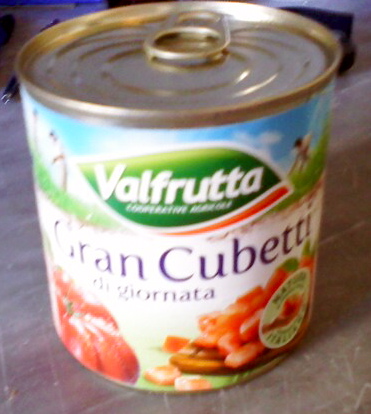
Okay, now that you’ve happily resolved the tomato issue, move the pot to the smallest burner on your stove, with it’s very lowest fire (or setting). Splorp in the tomatoes!
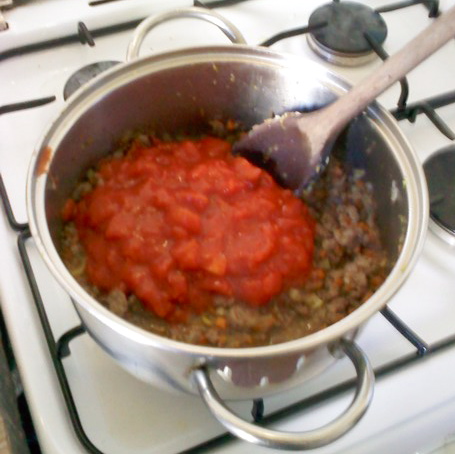
Okay, here comes the easy part :). Making sure that the meat is broken up as small as possible, stir in the tomatoes and slid a lid half way onto the pot and sit down to drink a glass of wine. Ragu is slow food, it needs to cook over this low fire for at least 3 hours for edible and preferably 4 for irresistable. If you started in the morning thinking you’d have it for lunch and suddenly find that it’s not going to happen, relax, you can have it for dinner. Never start a ragu later than 2 or 3 in the afternoon…unless you want it for breakfast. Remember this is 2-3 meals you’re going to put 2/3 of it in the freezer and have a care-free, ready in 20 min. meal twice next week.

Now, just to be sure, when I say a low fire on a small burner, this is what I mean. You’ll need to stir it about every half hour (unless you smell it burning). If it seems to be getting to dry, add in a dash of wine and cover it completely with a tight lid.
Brief warning, don’t cook it even 10 min. more than 4 hours, the meat will turn to saw-dust, trust me, I tried it once.
Okay, boil the pasta in well salted water (1 scant Tbs. of sea salt for every 2 quarts of water) 100 grams of pasta per person for adults. Use something that has ridges or crevices to grip the sauce or spagetti (any fresh egg-pasta is also good including filled ones such as cheese ravioli or tortolini).
Now, and only now, taste the sauce to see if it needs salt. When the pasta is almost done take the lid off the ragu and add about 1-2 tablespoons of the starchy pasta water to the sauce, turn up the heat. Drain the pasta put it in the serving bowl, add butter (yes butter, not olive oil) 1 tbs. to the pasta and one to the sauce. Turn off the fire. If you want to eat Italian-style pasta con ragu, ladle out about 1/3 cup of sauce for each 100 grams of pasta…. Italians do not drown the pasta in sauce, if the pasta is good, it is nice to be able to taste both. In Italian they call this kind of dish pastasciutta, pasta is the main ingredient to which the sauce is added as an accent.

If you want american-style spaghetti then put the whole pot of sauce over a pound of cooked spaghetti.
Stir the sauce through the pasta and then dish it up! Tastes great with a dusting of freshly grated parmesan.
Divide the leftover sauce into two containers (about 1 cup of sauce per container) and let cool before putting in the freezer. You can also use this sauce for the meat-sauce part of Lasagna but that’s a whole day project!
Hope that you enjoy making it as much as eating it.




 Bonnie McClellan-Broussard