Language’s Power: across the universe

This year I had the pleasure of an excess of inspiration, both in my work and outside of it. First and foremost I had the amazing luck and pleasure of translating a book by Andrea Moro, an Italian linguist and neuroscientist. The book was about the verb ‘to be’, its grammatical (and in some senses philosophical) history, it’s unique position in linguistic theory and a tempting little possibility of a hint about how our brains ‘react’ to language. Fortunately for me, the book was geared towards a non-specialized reader and chock-full of fascinating stuff that I never knew about language. I learned more than I could have ever imagined. Meanwhile, in preparation for translating that book, I read a few of his other books, both in Italian and in English to get a sense of his perspective and voice before I began the translation. As soon as I read the following line from “The Boundaries of Babel: The Brain and the Enigma of Impossible Languages” my mind went straight to this essay that I would be writing to introduce International Poetry Month 2017. It so clearly describes the reader’s experience while also implying the writer’s:

Even now, your eyes are following a string of black signs that conveys ideas and images that were produced by a different brain in a different place at a different time. If I wanted, I could, simply by writing, activate images in your mind that may not have been there before: A long line of lizards crossed the desert without even stopping to dream. It is quite unlikely that you have already encountered this sentence. Nevertheless, the image was created in your mind with no effort, just by your scanning that string of black symbols.            -Andrea Moro

Imagine what power poets have to create in the mind of a given reader, who exists in a completely different place and time, a never-before-encountered image. What a joy it is to write! Communicating across time and space, creating a word-map of your own images, associations and experiences waiting to be unfolded and explored. And then again, what a profound pleasure to read! The unexplored word-map awaits only your eye to be revealed and, in the reading, creates a new map of your own associations and experiences.
Over 2016 the power of language to damage and tear apart has never been more evident, from Oxford’s word of the year, post-truth, to fake news, to political rhetoric, to harsh exchanges between friends and families. In February of 2017 I would like to counterweight language’s destructive power and offer instead an opportunity for language to link people and places in a shared ‘neural network’ of creative exchange between readers and writers.

Are you ready? IPM 2017 is now open for submissions.

Next up: Poetry as Time Travel – why is the woman planting trees with her foot? Why is the man crying over the peg? Wouldn’t you like to know?
Dark Business: by Bonnie McClellan

Like cinderella’s slipper

this poem arrives

to fit your mind’s foot,

hard but comforting.

If not, blood will tell:

‘you’ve trimmed off a bit’

        –heel or toe–

the doves will call you out

even if the sky has read

the weather report and

dropped its fog to hide

your stocking’s stains.


Not like the brazen giant of Greek fame,

With conquering limbs astride from land to land;

Here at our sea-washed, sunset gates shall stand

A mighty woman with a torch, whose flame

Is the imprisoned lightning, and her name

Mother of Exiles. From her beacon-hand

Glows world-wide welcome; her mild eyes command

The air-bridged harbor that twin cities frame.


“Keep, ancient lands, your storied pomp!” cries she

With silent lips. “Give me your tired, your poor,

Your huddled masses yearning to breathe free,

The wretched refuse of your teeming shore.

Send these, the homeless, tempest-tost to me,

I lift my lamp beside the golden door!”

 – Emma Lazarus

Borrowed Words: by Bonnie McClellan

BORROWED WORDS

Adam to Eve, later in life,
after babel’s tower fell,
began his speech with borrowed words:
“Oh, my love!”
What world would I not give now
for that eternal, ancient fantasy:
“A loaf of bread, a jug of wine, and thou!”
In the shade of Kunitz’ VERY TREE,
the gentle spark released beneath
lithe pressure of your palm
above my heart
which would break
its fragile net of bone to rest
that narrow distance
closer to your flesh.
Now distracted by quick thoughts
of two french words: “chair” for flesh and “peau” for skin.
The first implying something
more animal/essential; the second softer,
more sensual than elemental:
“chair de ma chair.”
“os de mon os.”
ossature de ma vie.
bone network, calcite frame.
White
white,
like bread,
like wine;
in my bones singing:
“sang de mon sang”
with each red cell
new marrow-minted.

The Housewife’s Lament: Laundry – by Bonnie McClellan


The washing rustles its sorry story:
table stains and grey dust
leave off
hanging on
by a thread.

The Housewife’s Lament: Guest – by Bonnie McClellan

Having left my eyes ajar,
night falls in:
drunk and tired as ever,
asking me to tend
the electric altar of his current stars.

It’s been days since
you packed up the suitcase
of your kiss.
I’m here with the night,
catching the anti-meridian in my arms.

Solareclipse 2105

Sonnet on Descartes’ Vinyard / Sonetto sul Vigneto di Cartesio: by Bonnie McClellan

SONETTO SUL VIGNETO DI CARTESIO

Paesaggio trascrive in polvere il fantasma del tempo
Tratto manomesso; friabile, reticolo evidente.
Maledizione di Jahweh, o di Minerva fatidico dono
Nudo frutto d’Eden, nel lavoro ridefinito.
Asse cartesiana della mente ben ordita
Contro il caos verdeggiante; la ruota della ragione.
EGO SUM dell’uomo tirato in campo ardente
Morbida, intransigente linea infinita.

Cosa abbiamo perso in questo mondo ben composto,
Arato dalla nostra razza divisa e consapevole?
Beatitudine incolta, dura, senza nome;
Primo bacio selvaggio tra Adamo ed Eva d’ossa fine;
Frusciante betulla sbiancata, mai scritta;
Panno primale della lingua, tessuto ma ancora spiegato.

*****     *****     *****

SONNET ON DESCARTES’ VINEYARD

Landscape writes out in dust the ghost of time
Well-fingered tract; friable, forceful grid.
Yahweh’s curse or Minerva’s fateful gift
Naked fruit of Eden, in labour, redefined.
Cartesian axle of the ordered mind
Brought against verdant chaos, reason’s wheel.
Man’s own I AM scratched out in burning field
Soft, intransigent infinity of line.

What have we lost in this well-structured world
Ploughed out by our sentient, divided kind?
A hard, unnamed, uncultivated bliss;
Adam and fine-boned Eve’s first savage kiss;
Clattering, chalky aspen undescribed;
Primal cloth of language, woven, yet unfurled.

Click on the player below to listen to the podcast:


Per ascoltare allo podcast in italiano, premete qui sotto:

The Housewife’s Lament: Calliope

CALLIOPE

The circus of your funeral came to town
with show posters
and the cacophony of bells pealing
down to the quick
insistent, pacing, rhythm;
The priest’s nasal bullhorn prayers appealing
down the night’s procession.

TOMORROW ONLY

Your show posters remain. Peeling
down at the corner.
Not firmly affixed or
not enough to hold.

La Mamma: di Robin Kay Broussard

A poem written for me on mother’s day by my daughter, Robin Kay Broussard. She’s in the 3rd grade and they gave the kids a choice of copying down a poem or making up their own. Robin chose the latter and I’m quite proud of her. In Italian it’s in rhyming couplets; my translation doesn’t achieve the same but I’ve done my best.

poetry

Translated it’s a bit like this:

You are mine

dear Mama,

with you

in my heart a breadth is born.

I love you very much,

both on days stormy and those serene.

From my heart to my fingertips,

you are the queen of my life.

You’re pretty and laughing,

full of life, content and smiling.

Robin Kay Broussard (9 years old)

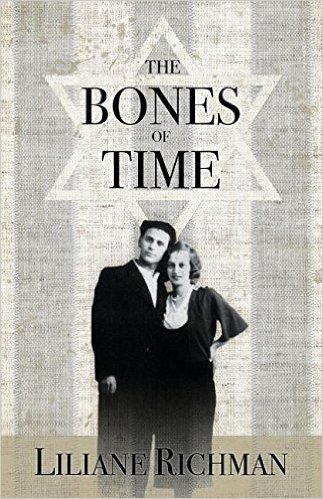
The Bones of Time: Liliane Richman

bones of time

IPM may have taken a break in 2016

…but our poets haven’t!

After working for the last several years, popular IPM poet Liliane Richman has published her memoirs this month. It’s the story not only of her own astonishing life but how it intertwined with the lives of her family. Much of the narrative takes place over the course of the the turbulent 1930s and 40s which was deeply marked by the war and, for Liliane herself, by her sojourn in southwestern France where she was sent to safety as a small child. When she returned to post-war Paris, and against all odds the family was reunited, Richman recounts in crystalline detail the difficult dynamics of a city and a family working out how to go on living.

Full of the resonant, clear-eyed imagery that you’ll recall from her poetry, Liliane’s book is full of memorable landscapes and portraits that convey the essence of the people and the times that formed the ‘bones’ of the woman and the writer she has become.

The Bones of Time is available on Amazon.com.

as well as from: Barnes and Nobles

“Love emerges as the theme and driving perspective of this witness
to suffering and survival, making it one of the most beautiful and
haunting memoirs I’ve ever read.”

—Edie Brickell, Songwriter and Performer—