This poem has disappeared from this website. To hear a reading of the poem, click on the player below:
copyright 2013 Adina Richman, all rights reserved
To hear more poems by Adina Richman, click HERE.
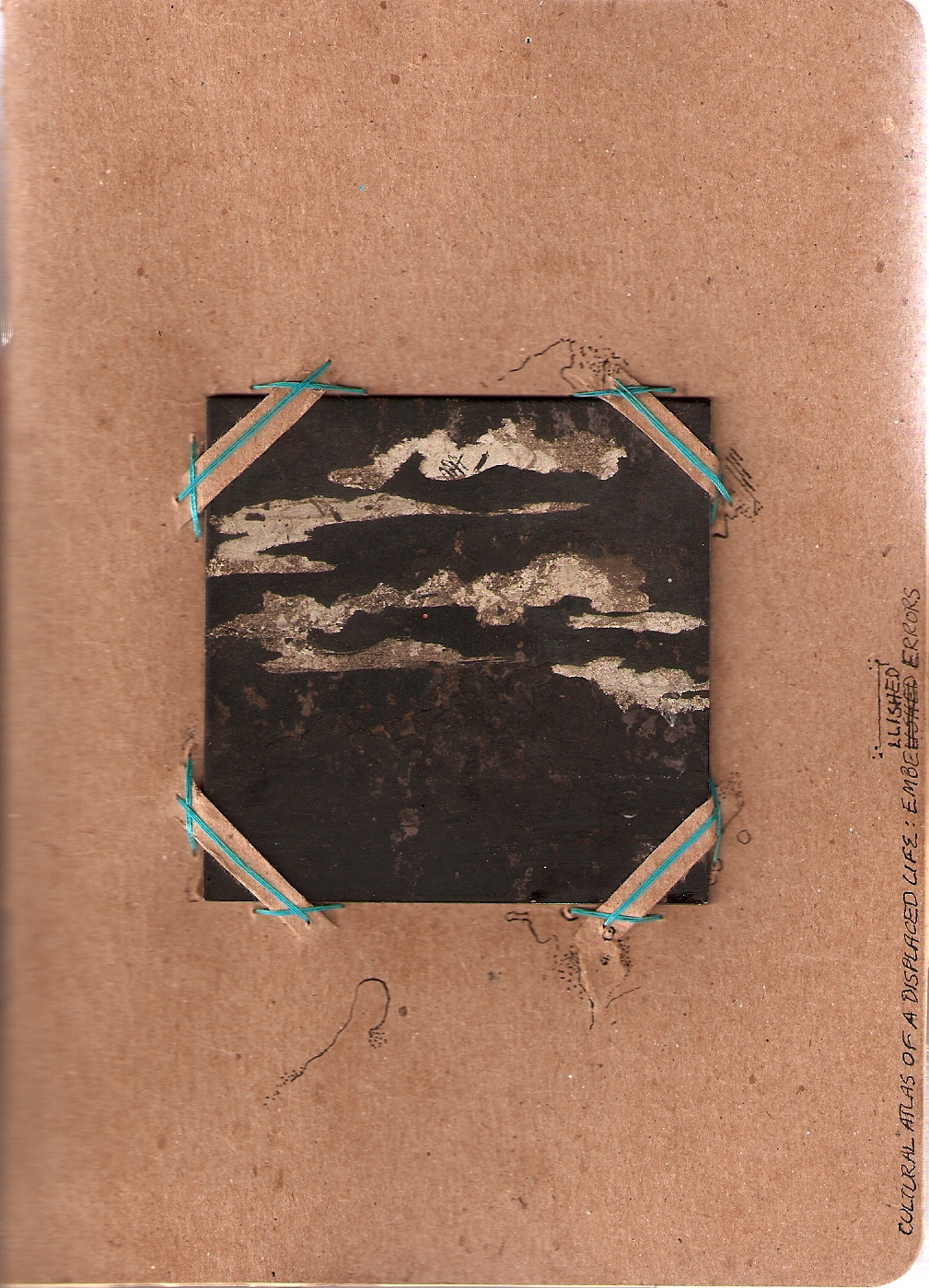
reflection: spare crop / fleet mind

I had been casting about for a theme for International Poetry Month 2014 for almost a year when my husband, Matthew Broussard, made a series of paintings on the theme of ambiguous and iconic gestures in December. As soon as I saw the painting “Leap” the phrase in the heading above came to mind.
After a year of listing to news packed with war and disaster, perhaps the unaltered quote from Shakespeare’s Henry V would be more apt – although a quick recap of the years news will tell us that the gap was filled with dead of every nationality: the building collapse in Dar es Salaam, the Fertilizer plant in West, Texas, the Boston Marathon bombing, the constant undercurrent of the financial and employment crisis in Europe, a devastating typhoon in the Philippines, drowning of migrants off of Lampedusa, the wars in South Sudan, Syria…does your heart feel like lead yet, are you about to click on a link to something else, anything else?
Poets are charged with throwing their works into the breach, paving the unseeable future with words that transform the painful, the splendid and the ordinary of where we are now and where we have been, into where we are going…making the leap, perhaps of faith or perhaps of desperation or even of joy. The future is there: blindingly dark, spattered with patches of dense brightness. We’re on the precipice, hanging above the clouds, now….LEAP
– Paul Verlaine 1870
The landscape by the car’s door framed Runs furiously, and entire plains of water, of wheat, of trees and sky are swallowed amidst conflicting tides where in falling, slender poles and telegraph’s alluring wires, write a strange paraph. Smell of charcoal burning and boiling water, Every noise of a thousand chains lashed round A thousand giants screaming, bound; Then in a blow, the owl’s prolonged laments. – What is all this to me, since my eyes hold White vision that my heart joyful renders Since for me that voice still murmurs tender, Since that Name lovely, sonorous, noble Blends – purest hub round which all spins – Sweetly, with the railcar’s brutal din. -Translated by Bonnie McClellan-Broussard 2013MON REALE / MASON’S EUCHERIST
Tourists take photos while the faithful take communion.
The priest extends God
again and again.
within the cardboard flavoured
benediction of holy bread
He Is
reconstituted by faiths’ sanguine tongue.
The exchange of force:
the weighted wheel that rights itself
the pendelum
the cam shaft
the finger on the shutter button:
charged reflex of the aperture flash-writes the icons’ golden tesserae
to memory
again and again.
Monday, in the winding weekday of a suburban street:
The bread man drives a panel truck
newgreen once, now filmed with summer dust cast up from the road
innocent as the first stones that years ago
smacked off enamel chips and so
engendered oxides’ ruddy rose.
Chanting through the nasal static of a loud speaker
unintelligible words.
His rough square hands convey
in paper, through which butter has begun to soak,
delicate pastry filled with almond paste and dark chocolate
lightly dusted with powdered sugar, and then:
two swallows of thick, black coffee,
in a plastic dixie cup.
The 10 a.m. taste of salvation
again delivered to working men.
In celebration of the life and creativity of my father, Tom McClellan, who passed away this last Saturday, August 3rd, I will be publishing some excerpts of his work. The following is an essay from his book “Reflections from Mirror City” a partner to the one I posted on Aug. 7th.
(An earlier version, “On the Death of My Father,” appeared in the Texas Observer)
When my father died, I felt, more than anything else, relief. A long battle was over for him. He had fought to live a long time, and for eighty seven years, including rehabilitating himself from strokes both small and great, he remained victorious.
And a long battle was over for the two of us. My most frequent critic was at last silent. Never again would I be told that, whatever I was doing, it should have been something else.
My mother eventually put this problem with my father in a homey Scott County context. She said that the Taylors, my father’s family on his mother’s side, always felt called upon to give advice, whether it had been requested or not. I realized that thirty years of bitter arguments could have – and should have – been resolved with laughter.
And he could not accept a gift, at least not from me. I was inevitably told I didn’t have that kind of money to spend.
Finally, each sought from the other what he gave. I wanted more respect, while he wanted more love. I wanted more distance, as from a cactus, while he wanted the closeness that his prickly nature and my sensitivity made difficult.
But there was more to us than that. I respected him for the man he was, and he loved me for the son I would always be. I can remember him, bent with age, barely able to stand, reaching an arm around my shoulders to tell me he loved me.
He liked one of my essays well enough to give it his highest accolade, “That’s a classic.” I don’t remember which one it was now; but if the man who could quote Bobby Burns’ “A man’s a man fa’ a’ that” from start to finish, and who snuggled me down between him and Mom to read aloud Carl Sandburg’s volume on Lincoln, “The Prairie Years,” for a bedtime story—if Dad liked it, I figured it was probably OK.
After he died, I got out all the letters he had written to Mom from overseas during the Second World War and read them to her. Captain McClellan longed for nothing more than to be out of the frozen muck and away from the cannons’ roaring, and home with his wife and child in the warm Texas sun. He wanted the scene he had left.
But of course he could not come home to precisely that. Peacetime brought its own struggles, and the ideal family that memory must have built had never been. His only son was an oedipal four-year-old, rather than an admiring two.
To an extent our difficulties with each other rested on that foundation, and I have had cause since to wish that in understanding our central dilemma I had also resolved it.
Like any other man worth his salt he changed and grew as he aged. I saw the man who had walked through a German bunker counting corpses of enemy soldiers jellied by the artillery barrage his battalion had delivered, saw him gaze at the body of a ground squirrel he’d nailed with a pellet gun and suddenly weep.
As his end drew near, his very age provided the distance I needed. When he fulminated now, he was simply an old man blowing off steam. And he became more vulnerable, still crabby but soft-shelled. We seemed to have reversed roles at times. A veteran of some very foreign wars myself, I had become the callous one, he the sensitive.
But he could still hurt me if I didn’t keep my guard up. He once confessed that his life seemed to him to have been a paltry thing indeed, and I answered with a letter filled with praise, listing his accomplishments. He had fought for his country, he had taught farmers to farm, he had taught and counseled high school students, he had taught poor and disadvantaged adults. Rather than allow strokes to disable him, he had struggled to regain control of his brain and body. Later he characterized it as the obituary I had written.
There we were again, at odds. I had offered him a gift, and he had refused it. He had offered me an opportunity to laugh at myself, at us, and I’d bristled instead. In retrospect I wish I’d been tough enough to admit the truth of his charge—it was an obituary of sorts—but not so tough as to retort that he was about due for one. The bent and weakened frame of an old war horse invalided in pajamas commands deference and kindness. Especially when you remember that figure with an arm around your shoulders, telling you he loves you.
When I reflect on how we become more and more creatures of habit as we age until we threaten to shrink to nothing more than a collection of predictable behaviors, it seems less likely to me that we are indeed possessors of that much-advertised divine spark. I even wonder if we mortal wrecks are salvageable at all, and if so, why the Almighty should bother with us. I guess the love of Him who knows truths about us closer than the dirt dug from under our nails, nearer than the seat of our unperfumed underpants, must outshine human love by a good half-mile.
But even simple human love, without divinity or angels to help it, beaten and twisted like iron banged straight at the forge’s mouth, even that seems to me at times enough.
+++
Elysium

We came at last to the middle of nowhere.
Homey, suburban, not alien at all.
A side yard between two houses,
Where children often play,
Untouched by growing pains or war.
…
“The Elysian Fields, or the Elysian Plains, were the final resting places of the souls of the heroic and the virtuous.” (Wikipedia)
+++
In celebration of the life and creativity of my father, Tom McClellan, who passed away this last Saturday, August 3rd, I will be publishing some excerpts of his work. The following is an essay from his book “Reflections from Mirror City”:
December 21, 2009
Dear Family and Friends,
I was given respite this morning from the grey, vague bird of grief that’s been after me since Mom died. First, I woke up deciding to take the day off from will hunting and concerns of probate, the mailing of death certificates, how best to handle the estate. Next, when I got to the all-nighter for coffee, one of the regulars, whom I know well enough to call by first name and tell him that my mother had died, said, “I know where she’s gone, and it’s a better place,” which led to our talking about out-of-body experiences. He’d been officially dead for ten minutes in Presbyterian ICU.
Unofficially, he looked down on his body, felt sorry for whoever that fellow was, sensed that he was being judged, told “There’s no reason for you to be afraid,” enveloped by a spectrum-spectacular light show that became a tunnel through which he traveled at the speed of light into a black void, enveloped by a brightness like looking into the sun–then found himself back in his body where people were jump-starting his heart with fibrilators. And his body hurt.
Just before he reentered his body, he was told not to forget what he’d been through in the Beyondness. Despite the speed at which he traveled through the tunnel, he could see that “It was kind of like bars.” Another man who’d been through the tunnel asked me, “Did you notice – those walls are woven of light.”
For me, the brightness in the beyond is Light, a sort of supernatural neon that leads into a source of pure Love and Joy, brighter than the sun.
For my fellow I-Hop regular, the Light was a source of Peace.
We agreed that if you could base a theology on such experiences, it would be as simple as Star Wars mythology. There is a Force in the universe with a bright side and a dark side. You can be with it. We are here to learn to love and love to learn.
My coffee communicant and fellow graduate of trips into Beyondness had a distinct feeling of being judged, the sense that he could have gone some other where. During his time in the service, he had nearly been killed and just as the common phrase says, seen his life flash before him. Maybe he got the visual the first time, the mental the second time.
We also agreed that the experience is very nondenominational. You make certain choices with regard to God. Whether you are a Jew, a Muslim, a Hindu, a Baha’i or a Buddhist scarcely matters, much less whether you are baptized by total immersion or by water dipped to trace a cross on your forehead.
You make certain choices. I had chosen for the first time to pray, not by rote but by faith in a God I did not know was there–you know, Pray. And, as a result of those decisions, I asked the Universe where love comes from, then found myself traveling through rings of Light out the back of my head into a five second glimpse of what my fellow traveler got the ten-minute tour of.
And the answer was, “God is Love.” Simple question, five-second trip–including a float over trees and rooftops, glimpsing my rooftop outlined in Light, then back in my body with–simple answer.
You make certain choices. A poet friend of mine was in his twenties when he entered the Light. He and his roommate had argued to the point where they decided to let the disagreement go and meditate. The meditation brought them both into Light and connectedness. “Did you see that, that light?” he asked his roommate, who answered, “Yeah.”
“For days afterward,” said my friend, “I could not make a mistake. I skidded through a red light once, and I’ll swear, the cars parted to let me through.”
We get from the Beyondness what we seek and what is appropriate to us, at that time. For the poet this satori of sorts was a matter of being twenty, and it became for him another town along the road. For me, at thirty-two, it was a religious conversion that tore my marriage to shreds.
And a presagement of a Beyondness into which I gaze from time to time–I’ve seen my wife of sixteen years become a body of Light for a moment walking down the hall; and on my tongue felt the great silent power of that Sun Invisible in the form of a communion wafer. We get what we need from the Beyondness.
My cafe companion, in hit late forties, received from Beyondness a preparation for moving into it. “You can go back to school,” he said.
And we agreed that such experiences are watershed experiences. You don’t forget them any more than you forget your first love. You are changed in no small way.
Faith comes easily afterward. You have no fear of death.
I thanked him for reminding me of that part. I had been missing Mom so much I’d forgotten where she is.
+++
Biography of a Bipolar
At first friends share the ecstasy that comes before the burn:
“That night he was going crazy everyone
was too drunk to care.”
But after years all learn:
“His conversation grew brilliant and alarming.
Students were frightened by his lecture on Hitler.”
“He wrote the most pitiful letter;
though I was not angry, he spoke of us fighting.”
“His religious notions, never stable, flowered
into oddity; his judgment went haywire.”
“He was barricaded in his room in his skivvies when the police came;
he was surprisingly polite.”
The poet obligingly provides snapshots from hell:
“I meditated Detachment and Urbanity but the old menacing
hilarity was growing in me.”
“What use is my sense of humor when the brain blinks
like a radio station rapidly distanced?”
“I lay there secured but for my skipping mind.”
After the delusions pass, he lacerates his soul with reason:
“Seven years ago Bloomington stood for Joyce’s hero and Indiana for
the evil, unexorcised aborigines, while I suspected myself
The Holy Ghost. The glory and banality of it are corrupting.”
The poet’s wife learns to suffer a fool who falls in love
with students, madhouse nurses,
any woman but her:
“I don’t think he realizes the damage.”
New drugs offer old hopes of Panacea:
“To think of all that suffering for lack of a little salt in the brain!”
Theories suffer the usual changes:
“Recent research shows mania’s a summertime disease,
perhaps an excess of light.”
…
(Robert Lowell)
This poem is excerpted from Mr. McClellan’s book: Reflections From Mirror City
.
.
.
.
light-bearing months; burnt out, used up, exhausted, passed by
heavy grey clouds twisting, cajoling, traveling along the route of back-lit, illuminated, golden-edged time
passed, exhausted, used up, burnt out; visual border between heaven and earth compensated, forfeit.
.
.
.
.
inter: put into the earth
prestation: the obligation to perform or not perform a duty

Years ago my mother gave me this cook book. It’s a first edition from 1950 of French recipes by Mme. Germaine Carter. Of interest for the story of how it was compiled as for the recipes themselves; Mme. Carter, her husband (the British consul at Boulogne) and Mr. Rapp (British ambassador to Mexico) were interned together in Brandenburg during WWII and passed much of the time discussing French cooking and compiling this book.
Although there are many things in this book that I will probably never make – say, Calf’s Brains with Cream Sauce or Lark Pâté – I have found that the recipe for mayonnaise is stupendous and, like the two cake recipes I use again and again, easy to follow with reliable results. First take a look:
 |
| Mme. Germaine Carter’s Gâteau à l’orange |
Looks good, yes! Here’s the recipe:
4 eggs beaten
2 cups sugar
3/4 cups milk
3 cups sifted flour
4-1/2 tsp. baking powder
1 tsp. salt
grated peel of 2 oranges
juice of 1 orange**
1 cup butter
Beat the eggs wit the sugar; add a little milk. Sift the flour wit the baking powder and salt. Add milk and flour alternately, beating well. Add the orange peel and juice of 1 orange then the butter. Beat well and pour into 2 greased loaf pans. Bake in a moderate oven (350ºF / 180ºC) for 40 min. Remove from the pan to a cooling rack.
It is in fact, as easy as it sounds. My only modifications have been to bake the whole shebang in a large sheet cake pan and to check it after 35 min. She follows this recipe with another for ‘orange syrup’ which uses the juice of the second orange, another cup of sugar and a 1/2 cup of water; however, I’ve only done that once. The cake is quite ‘orangey’ enough without and my whole family loves it ‘as is’ with no icing or with sweetened whipped cream and fresh strawberries as in the photo. It does make a lot of cake so it’s perfect for a party, the layer cake you see in the picture is what I made with the 1/3 that was left over the second day after the other 2/3’s had been devoured ;).
Hope that you all enjoy Mme. Carter’s Gâteau à l’orange as much as we do.
**This is one recipe in which those beautiful Italian ‘blood’ oranges are not recommended unless you want your cake to turn a bluish-grey! The beautiful hot pink juice of these oranges is Ph reactive and will change color when it combines with the baking powder


 Bonnie McClellan-Broussard