Tip of the hat to Galileo…The Dialogue Concerning the Two Chief World Systems.
I’m standing in the kitchen with my sweetheart, we’re making dinner, the girl is circling our legs like a small, very talkative shark:
“So, you’re going to leave the poetry up.” he says.
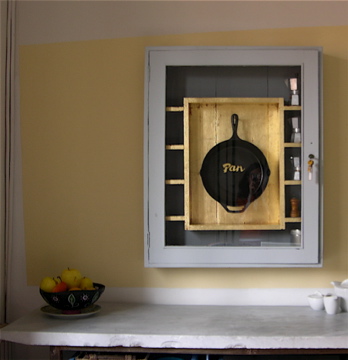
“No, I’m putting it up from the 1st of February until the 28th. On the first of March it all disappears,” I reply, shifting around the green beans and bacon in the bottom of the cast iron skillet.
“But your other poetry, you’re leaving that up?”
“Yeah, the stuff from the regular blog will stay. But the work from International Poetry Monthwill go. The poem posted on Feb. 1st will be available for the whole 28 days. The poem posted on the 28th will be up for 24 hours. I’m going to leave the audio recordings of the readings on the site.”
“So why take the blog posts down, to make it more of an EVENT?”
About now, our girl is at the height of her performance and frantically switching back and forth between being Captain Hook and a baby goat. I am now Wendydarling…Captain Hook wants to give me a kiss but only if I pretend I’m a crocodile eating his hand…no wait, now we’re supposed to bonk heads and say ‘maaaaa’. The stuff in the pan is starting to smell good but it does that right before it starts to burn. I struggle with managing the traffic in my mental train yard while I think about my response,
“Well, yeah. You know, we talk about how people post a zillion links on FB, there are 5 stories you mean to read on the news sites, not to mention the infinite list of things we’ve been meaning to google… and we think, ‘Oh yeah, when I have a minute I’ll check that out but right now (insert favorite and perfectly valid excuse here)….’
Our assumption is that the content will always be available. I want people to feel that they have something to lose if they don’t go and look now. It’s not just that; it’s also because I want this to be a microcosmic, super-fast-acting mirror of what history does to poetry.”
My sweetheart hands me a glass of wine, my daughter bangs her head into my leg with enough force to fell a small pine tree.
“In what sense?” he wonders (meanwhile scanning theBBC Homepageand clicking through the iTunes playlist; and he says he can’t multitask…)
My mental ‘poetry train’ is rambling through the landscape of old thoughts, essays I wrote about writing 5 years ago, the link about the history of books that a friend posted this morning, and the submissions that I’ve been organizing for this month:
“How many poets were writing at the same time as Sappho or ‘Homer’? Was she really the best? Time washes through, consumes everything and spits out the bones. We have the luxury of instantaneous access to information so that we think that we don’t need to remember anything…we google it and then forget it.”
“So, why leave up the podcasts…why not delete it all?”
“In the beginning there was the word. The roots of poetic form grew from the soil of the human voice; metre and rhyme began as mnemonic functions, which were only much later codified as written forms. The way in which the English speaking world views the work of western literature’s first poet (or poets) ‘Homer’ is not a result of his composing on the page but the culmination of the labour of Greek writers who transcribed the works, later translations into Latin, and much later translations into other European languages and then to English…who knows how much this work mutated before it was codified? Isn’t that beautiful to think about?”
I realize that now I’m sounding and feeling a hopelessly ‘wordnerdish’. How do I convey how important I think it is to listen…with attention or the joy I have playing with words in poetic form and reading the work of others who are doing the same? It’s like the fun Galileo had searching the sky, drawing diagrams, and rolling objects of different weights down an inclined plane; or like the pleasure of a child playing with sand and water on the beach, making dams of shells, digging channels, making order out of chaos, knowing that it will all be erased by the tide and not caring.
“So you’re going to explain this to people…write a curatorial statement beforehand right?”
“Umm, yeah…I guess that’s another ‘naptime project’.” my daughter tries to wriggle in between my legs and the stove.
He laughs, “Naptime Projects, sounds a good title.”





 Bonnie McClellan-Broussard